MAURITIUS TRAVEL GUIDE

Cavadee, Tamil religious festival on Mauritius Island.

If your stay in Mauritius is between January and February, this vibrant event is absolutely worth seeing. The Tamil religious festivals on the island of Mauritius, originating from southern India, are the most spectacular and colorful. Every year, this celebration is observed in the tenth month of the Tamil calendar. The Thaipoosam Cavadee ceremony is a series of rituals that bring together the Tamil community.

It begins on the edge of a river and ends at the Hindu temple in every region. Its purpose is to purify the evil of the soul… We love to attend this festival with the children in this atmosphere of spirituality and fervor. Sensitive souls should refrain, as the non-religious may be frightened by observing these sacred rituals.

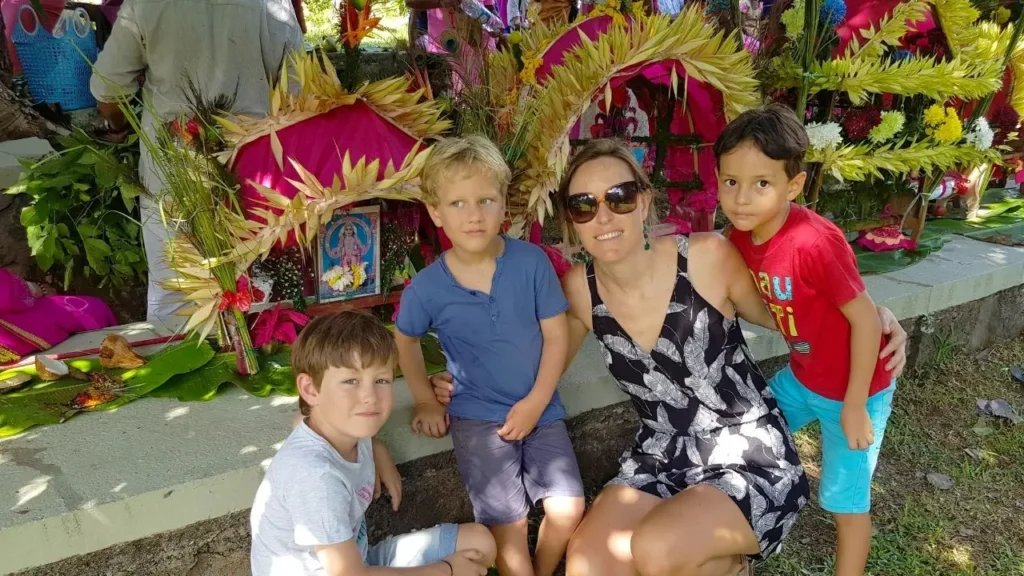
Behind the scenes of Cavadee, a Tamil religious festival on Mauritius Island

After ten days of fasting, prayers, and penance, this ceremony purifies the souls of the faithful. This ritual is dedicated to the god Muruga, the son of Shiva, the god of youth and beauty. At the beginning of Lent, devotees build the cavadee. This wooden and bamboo arch is adorned with flowers, coconut leaves, and peacock feathers. On the day of the celebration, men will carry it on their shoulders from the river to the temple. In legend, it represents the peaks of sacred mountains and allows for the transport of offerings, including, among other things, a pot of milk called Saumboo.

It is an incredible and enriching experience to experience during your family vacation on the island of Mauritius. For this, we recommend arriving early to attend these ceremonies that are part of our culture. Please check in advance to access the site closest to your accommodation. Laurent and I are organizing an electric bike tour to learn about or follow the various rituals! Unique to the island of Mauritius!

The purification at the river during Cavadee, the Tamil religious festival on Mauritius Island

The day begins at 4 a.m. Women wear their most beautiful fushia saris and men drape a “vesti” around their waist. This garment covers the legs during Tamoul religious festivals on Mauritius Island. However, they remain shirtless. Pilgrims gather near a river where they immerse themselves completely to purify themselves. A pandit (the priest) blesses them.

Then, the fathers prepare their sons by dressing them in festive clothes. Incantations, praises, and incense smoke accompany the installation of fine silver needles pierced into the skin (cheeks, tongue, chest, back). Lemons (citrus) and small pots filled with milk are hung on the body with hooks. These needles resemble the lance of the god Murunga. Those who have decided to pierce their tongue make silent wishes.

The procession to the temple for Cavadee, the Tamil religious festival on Mauritius

After purification comes the time for the procession to walk to the nearest temple. The bearers of the Cavadee, with their heavy load, set off. They are accompanied by a crowd of women and children of all ages. The procession is paced to the rhythm of the drums. Women carry tall copper pots on their heads filled with leaves and garlands. Other believers enter trance under the effect of fatigue, youth, music, and heat. Some walk with spike shoes, a sign of suffering to draw closer to their god. This crosswalk is the ultimate sacrifice. Songs and dances punctuate the pilgrimage. Generally, everyone walks barefoot on the burning asphalt during this very hot time of year. Fortunately, trucks spray water on the road to alleviate the burns.

Upon arriving at the temple, the men can lay their offerings on the ground and place the offerings on the altar (coconut nuts, flowers, coconut milk). A prayer session concludes this day. The women distribute food to the participants, marking the end of their dietary regimen. Tourists are also invited to eat if they remain respectful of the traditions and in a warm spirit. On the menu, dishes based on curry or vegetarian briani and rice, traditional Mauritian dishes.

The legend of Muruga, a Tamil religious festival in Mauritius

To better understand the rituals of this Tamoul religious festival on the island of Mauritius, here is the legend of Muruga. He was the son of Shiva, one of the most revered Hindu goddesses and of Shakti. He was considered to be the god of youth, beauty. Therefore, Muruga represents love, wisdom, and compassion. He possessed a spear called vel, with which he won victories against evil.

On the day of the Cavadee ceremony, the needles that the faithful pierce into their skin symbolize this lance. One day, he meets Idumban, who, at the request of a wise elder Aggatiyâr, who asked him to bring back two peaks from Mount Kaîlash. On the way, Muruga would have mocked him. Enraged, Idumban and Muruga fight. Muruga wins the battle. But, impressed by his opponent’s courage, he decides to resurrect him. Muruga then decides that anyone with the same character strength would receive his blessing in return.

Séjour Séjour Séjour Séjour Maurice organizes your tailor-made holidays. Contact us! 😁

Make the most of your stay in Mauritius
With Séjour Maurice, you can book your activities, accommodation and car hire online.

The Ascension of the Thumb

Le Pouce Mountain hike for families
Dolphin-watching catamaran trip off western Mauritius

Swim with Dolphins

Swimming with Dolphins and Mauritian BBQ – Private Excursion from Balise Marina

Hiking & Swimming

Hiking & Horse Riding on the Beach of Rivière-Noire

CUSTOMER REVIEWS

What our
guests say